
Vaiśākha Purnima is known as “The Thrice-Blessed Day”, Buddha Purnima. On this day, Siddharth Gautama was born at Lumbini – park (presently Nepal), achieved Enlightenment (Buddhahood) at Bodh Gaya (Bihar) and attained Mahāparinirvana at Kushinagar (Uttar Pradesh).
Nowadays, we commemorate Buddha Purnima Day in the month of April-May (April 28th to May 28th), on the basis of Nirvāna Year of 544 BC. After analysis it has been found that this date contains an excess period of 57 years and the revised exact date/year has now been found as 487 BC. As per the ancient tradition the Buddha Jayanti should be celebrated in April (instead of May); (See last page for Purnima month)
Till now, over thirty varying dates have been suggested by the scholars of South-Asian Buddhist countries, Tibet, China and experts from Europe / the West. Among them, the most popular dates are, 544 BC by the historians of South- Asian Buddhist countries, 881 BC by Tibetans, and 487 BC/483 BC by Indian/ European scholars and historians.
After a detailed comparative studies and analysis based on literatures of Sri Lanka, China, Indian/Greek; inscriptions and solar eclipse data; it has been found that only 487 BC can be fixed as the actual date for the Sakya Muni Buddha’s Mahāparinirvana.
The main points of evidence in favor of the date of 487 BC are as under:
- Dhamma- Aśoka was coronated 2181years after Mahāparinirvana of the Lord and his (Aśoka) date of coronation has been confirmed as 2692 BC. On this basis the Nirvāna date is found as 218+269 = 487BC.
- Dhamma- Aśoka’s son, Arahant Mahinda, arrived Sri Lanka in the year of 18th regnal year3 of Aśoka. This event took place after completion of the Great Third Buddhist Council in 252/251 BC. Arahant Mahinda converted King Divanampya Tissa, the sixth king of Sri Lanka, to Buddhism. The first king, Vijaya, arrived on the island of Lanka on the day of Mahāparinirvāna3 of the Great Teacher of the World. The elapsing period from the arrival of King Vijaya to 251BC is two hundred thirty-six (236) years. On the basis of this data, the date of Nirvāna is worked out as 236 + 251 = 487BC.
- The Dotted record of the Canton4, China, states that since Nirvāna of the Buddha, 975 years elapsed up to the year of 489 AD; 975 dots were counted before the rainy season of 489AD i.e., up to 488AD.Sanghabhadra (Indian Senior Monk) spent the rainy season of 489AD and put the last dot of 976th resulting, BE = 976 – 489 = 487BC.
- Dharma Aśhoka visited the birth place of the Lord after the great sun eclipse5 of 249 BC (i.e., visit in 248 BC) or 20 years after his coronation. This was 240th years after Mahāparinirvana of the Lord. This data also gives 487/488 BC as the date of Nirvāna.
- Buddha attained Mahāparinirvana in the 8th year of the reign of King Ajātasatru and on the same day, Prince Vijaya, son of the Prince Sinha landed in Ceylone and became the first King of Ceylone. King Ajātasatrue ruled from 495 BC to 463 BC.
- Date of Nirvāna = 495 – 8 = 487 BC (Refer: – Samanta Prasadika, a Vinaya commentary by Buddhaghosa and other texts on Vinaya).
- The Second Great Buddhist Council was held, hundred years (100yrs) after the Nirvāna
- of Lord or in the 10th Year of King Kālaśoka (397 BC-369 BC), Date of Nirvāna = (397-10) + 100 = 487 BC
- As per the Jain literatures, Chandragupta Maurya, started his struggle and acceded to throne one hundred sixty-two (162 Yrs) years after the Nirvāna of Lord Buddha. Chandragupta Maurya acceded to throne during 325-322 BC. Nirvāna Date = 162+325= 487 BC.
The above-mentioned date/data related to the Mahāparinirvana are explained in detail as under: –
1) Regarding 269 BC as the Coronation Year of Aśoka
- According to the research carried out by Fazy and Sidersky, Aśoka visited Lumbini after the sun eclipse of 4th May, 249 BC. This was his 20th regnal year; thus, his coronation ceremony falls in the year 249+20 = 269 BC.
- The 13th Rock Edict was issued by Aśoka in his 14th regnal It contains a reference to Five Hellenic King’s (Greek Kings) who were his contemporaries. The Last Greek King Alexander of Epirus died in the year 255 BC. This date again confirms the coronation year as 269 BC (=255 + 14).
4 i) The Oxford History of India by V.A Smith (page-75) ii) Ancient India by
V.D Mahajan, Ph.D. (page-180,181) iii) Chronology of Ancient India by Sita Nath Pradhan (page-238-247)
5 Aśoka….by Romila Thapar (page-15,50)
- Prediction Regarding Dhamma-Aśoka’s Coronation 218 years after Mahāparinirvana.
The Second Buddhist Council took place exactly one hundred (100) years after the passing away of the Master. Seven hundred Arahants and 1.2 million Bhikkhus took part in the council. It lasted for eight months. After having finished rehearsing at the Second Recital, those Elders who were investigating “whether a calamity of this nature, would in the future befall the Dispensation, foresaw thus”; In the hundred and eighteenth(118th) year from now (i.e., 100 + 118 = 218) the King named Dhamma-Aśoka will appear in Pātaliputra and reign over the whole of Jambudipa (vide the Inception of Discipline by N.A. Jayawickrama, p. 39).
3) The Actually Observed Era of 218 years as Preserved by the Ceylonese Buddhists
One of the fixed dates, which was established in an especially early period and which evidently forms the cornerstone of the whole system, is the number 218 for the consecration (Abhiseka) of Aśoka. The Dipavamsa (6.1) says
“dve satani ca vassani attharasr vassnica Sambuddhe parinibbute aābhisitti piyadasiino”
218 years after the Sambuddha had passed into the Nirvāna Piyaddassi (Aśoka) was consecrated and the Mahāvamsa also (5.21) says-
“Jinanibbanato Paccha pura tassa bhisekato, Sattharasam Vassasatadvayam evam vidaniyam”.
After the Nirvāna of the Conqueror (Buddha) and before his (Aśoka’s) Consecration, there were 218 years this should be known; the date is supported by the best testimony and has nothing in it to produce suspicion. (vide MAHAVAMSA OR GREAT CHRONICLE OF CEYLON P.XXIII).
- Arahant Mahinda’s Arrival in Ceylon and Coronation of the King Devanampiya Tissa
The third Buddhist Great Council was held at Pātaliputra in the 17th regnal year of Aśoka (i.e., 235 Buddha Era/BE). Thereafter the great Bhikkhus were sent to the border countries to propagate Buddha’s teachings.
The Elder Mahinda was sent to Sri Lanka in the 18th year of King Aśoka or in 236 BE. He landed at the Island on the Fullmoon day of the third month, i.e. Jyeshtha, King Devanampiya Tissa was appointed as king, one month prior to the arrival of Arahant Mahinda in Sri Lanka.
His second consecration was performed on the full moon day of the month of Vesakha. This event took place in the 18th regnal year of Aśoka or 251 BC (236 BE).
According to the Sri Lanka’s Chronology, King Devanampiya Tissa was coronated 236 years after the Landing of Vijaya, the first King of Sri Lanka. Thus, on the basis of the date, the First king landed at the Island in the year 251 BC + 236 year = 487 BC. (See Annexure A & B).
According to the prediction of Lord Buddha, the first king of Sri Lanka landed on that very day, when Lord Buddha entered into the Mahāparinirvana.
The extract from Mahavamsa p.55 about the consecration of King Vijaya says – “When the Guide of the world, having accomplished the salvation of the whole world and having reached the utmost stage of blissful rest, was lying on the bed of his Nirvāna, in the midst of the great assembly of gods, he, the great sage, the greatest of those who have speech, spoke to Sakkala who stood there near him, Vijaya, son of Lala, together with seven hundred followers. In Lanka, Lord of Gods, will my dharmma be established, therefore carefully protect him with his followers and Lanka”.
The above statement confirms the fact that the Lord entered Nirvāna in the 487 BC as the Mahāparinirvana, very well fits with the chronology of the ancient India, Ceylone and Greek kings.
- 881 BC (Iron-Male-Dragon-Year) adopted by the Tibetans for the Mahāparinirvana.
881 BC: This year as based on Phug-Lugs (Tibetan) and also supposed to be based on Kālacakra, accepted and made use of by the scholars of Tibet, around 1300 AD to 1500 AD, for the Mahāparinirvana of Lord Buddha. In Tibet, the composition of astrological works continued from the beginning of the 11th century to the beginning of the 19th century. The date of 881 BC (Iron-male-Dragon year) is also commonly adopted by the Buddhists of Northern India.
If the year 881 BC is compared with the year 487 BC of the Chronology of the ancient Indian Kings, who were the contemporaries of Lord Buddha, it makes a difference of 394 years.
The limitation in this regard is clear. Unless various dates tally with the Chronology of contemporary Kings in India as well as with those of the neighbouring countries like Ceylon, Greece, etc., no Buddhist or Indian history can be written in the current perspective. Apart from the difference of 394 years as worked out above, even a difference of 3 years cannot be accommodated in history in view of the latest available research works based on archaeological excavations, Sun-Moon eclipses and rock/stone pillar Inscriptions. The modern scholars unanimously agree that the Mahāparinirvana date should fall during the period between 480 BC and 490 BC. Thus, how a difference of about 400 years crept into Tibetan Chronological system needs to be ascertained.
- 544 BC adopted by Southern Buddhists for Mahāparinirvana.
544/543 BC: Actually, the bases of these two dates are same. 543 BC is the year worked out by astronomical/ mathematical calculations and to convert it into the actual BC date, one year is added.
Based on a Burmese inscription found at Bodh Gaya, 544 BC is agreed to at the international Buddhist level. The same year is commonly accepted these days in Sri Lanka and other countries, where the Theravadda System is being followed. It is also adopted as the year of Nirvāna in some parts of India, China and Japan.
This date also makes a difference of 57 years. It also upsets the whole Chronology of the contemporary Kings of Lord Buddha, as it does not tally with the history and chronology of events of the Kings of the period in other countries like Greece and Sri Lanka.
Based on the Greek history as interpreted by the modern scholars, the coronation years of Chandragupta Maurya and Dhamma-Aśoka are generally accepted to be 322 BC and 269 BC respectively. The accepted difference of years between the year of Nirvāna and coronation of Dhamma-Aśoka is precisely 218 years. This is the only figure accepted and established at the very early stage and mentioned in all the books of Pali scriptures and there are no two opinions about this figure of 218 years (Two hundred and eighteen years). If 544 or 543 BC is taken as the Mahāparinirvana year, Aśoka’s year will be 326/325 BC, which is the starting year of the battles of Chandragupta against the Greek ruler, Alexander the Great and the Nanda dynasty in Magadha. The total years elapsed between Aśoka and Chandragupta is 53 to 56 years and the date of Chandragupta works out to 378 to 381 BC which is not possible and incorrect as compared to the ancient chronology. The confirmed dates of 269 for Aśoka and 322 for Chandragupta cannot be changed even for 2 years. To sum up, the date of 544 BC contains an error of about 57 years, which requires further investigation and correction.
Secondly, the 544 BC date is based on the Burmese inscription found at Bodh Gaya. This inscription was written and installed by Burmese Scholars during 11th century AD. In Burma, intensive Buddhist activities started around 11th Century after the arrival of literatures and Scholars from Sri Lanka. It is natural that the source of this date 544 in Burma is from Ceylon, where the actual date was already changed during the military operation and during the reign of Chola Kings (from South India).
It is also found that the date of 325 BC (of Chandra Gupta Maurya) has been adopted mistakenly for Dharma-Ashoka (instead of 269 BC) for fixing the Buddha Era of 544 BC by the historians of Shri Lanka/South-East experts.
J M Seneviratne states, 544 BC of Sri Lanka was adopted in the world conference as a midway solution between the 10th century BC of Chinese/Japanese and 5th century BC of the West.
The early History of Ceylon by G.C. Mendis with a foreword by Wilhelm Geiger (pp. 4- 5) presents the following extract: –
“The difference of about 60 years (i.e. 544 – 483) which must have been occurred due to an alteration made by someone, if it did not occur owing to wrong reckoning of fraction of years. Professor W. Geiger thinks that the mistake was due to an adjustment made in the dates at the beginning of the first part of the Culavansa, around the end of 4th century AD and he corrects the error by deducting about sixty years from the reigns of Kit Sri Meghavana, Detu Tissa – II (Jettha Tissa) and Buddhadasa”.
- 483 BC adopted by the Western scholars for the Mahāparinirvana
483 BC: The Majority of the Western scholars concur that the year 483 BC is the year of Nirvāna. On the basis of this date, the year of coronation of Aśoka (Dhammāsoka) works out to 265 BC. The same date, however, does not tally with the Lumbini visit year of Aśoka.
According to Aśoka’s pillar inscription installed at Lumbini, Aśoka visited Lumbini after 20 years of his coronation. Fu-her categorically states that Aśoka visited the blessed spot Lumbini in his 21st regnal year. In Divyavadana (History of Aśoka preserved in China, and Tibet as well), Aśoka is stated to have visited Lumbini after the great sun eclipse and during the reign of Aśoka three full sun eclipse occurred i.e. on 4th May 249 BC, 15 June, 242 BC and 19 November, 232 BC. Out of these, the eclipse of 4 May 249 BC alone can be treated as only one which took place before the King’s visit to Lumbini. On the basis of this sun eclipse, the coronation year of Aśoka falls in 269 BC, (249 + 20 year). Aśoka seems to have visited Lumbini a few months later then this date of eclipse, i.e. in 248 BC. Hence the date of 265 BC cannot be treated as the year of coronation (vide Aśoka by Romila Thapar), and the date of 483 BC has also to be changed backward by 4 years.
8) Radio Carbon Dating Method
Another alternative, to find out the past date, is by the method of “Radio Carbon (C-14) Dating Method,” but the weakness of this scientific method, is the minimum percentage of error which ranges about from + 2% to + 8%. For the period of 2500 years, the variation may amount to +/-, 50 years to 200 years. The requirement of accuracy related to Buddha Era is up to + 5 years. As such, this method is not suitable for a period of accuracy less than five years and carbon dating method may be useful for a longer period of more than 5000 years and up to a variation of + 100 to + 300 years which can be tolerated comfortably. However, Archaeological Survey of India, conducted many tests at various Buddhist sites and found that the Buddha’s period was not earlier than 6th to 5th century BC and not later than 5th to 4th century BC.
ANNEXURE-A
| № | Name of the Indian King | Regnal years | Common Era BC | № | Names of the contemporary Ceylonese Kings | Regnal Years |
| 1 | Ajātasatru | 8
24 |
487 BC. =
471 = |
1 | Vijaya | 1
16 |
| 2 | Udayabhadda | 14
15 |
449 =
448 = |
2 | Panduvasudeva | 38
1 |
| 3 | Nagadasaka | 10
21 |
429 =
418 = |
3 | Abhaya | 19
1 |
| 4
5 |
Sasunaga
Kāl-Asoka |
17
16 |
398 =
381 = |
4 | Pandukabhaya (a) | 20
1 |
| 6 | Chandagupta (Maury) | 2
14 |
323 =
311 = |
5 | Mutasiva (b)
|
58
1 |
| 7 | Dhammāsoka | 6
17 18 18 |
263 =
252 = 251 = 251 BC. = |
6 | Devanampiya Tissa. = Mahinda Established in the Island | 48
59 1 |
ANNEXURE-B
Chronology of the Ancient Kings of India OF THE ANCIENT KINGS OF INDIA
| Name of the Kings | Length of Reign | Common Era in BC year | Buddha Era
w.r.t. 487 BC |
|
| 1 | Bimbisara | 52 | 547 – 495 | 60/61 – 8 BB |
| 2 | Ajātasattu | 32 | 495 – 463 | 8/9 – 0 BB
0/1 – 24 BE |
Lord Buddha entered Mahāparinirvana in the 8th year of Ajātasattu i.e. 487 BC.
FIRST COUNCIL. The first Buddhist Council took place at Rajagriha within four months after the Mahāparinirvana i.e. (5th month/Sravana)
| 3 | Udayabhadda | 16 | 463 – 447 | 24/25 – 40 |
| 4 | Anuraddha’s Son Munda | 8 | 447 – 439 | 40/41 – 48 |
| 5 | Nagadasaka | 24 | 430 – 415 | 48/49 – 72 |
| 6 | Sisunaga | 18 | 415 – 397 | 72/73 – 90 |
| 7 | Kāl-Aśoka | 28 | 397 – 369 | 90/91 – 118 |
SECOND COUNCIL. The Second Buddhist Council was held at Vaishali in the tenth year of King Kāl-Aśoka i.e. in 387 BC (100 BE)
| 8 | Ten Sons of Kāl-Aśoka | 22 | 369 – 347 | 118/119– 140 |
| 9 | Nine Nandas | 22 | 347 – 325 | 140/141 – 162 |
| 10 | Interregnum period
Chandragupta’s Struggle and downfall of Nandas |
3 |
325 – 322 | 162 /163– 165 |
| 11 | Chandragupta (Maurya) | 24 | 322 – 298 | 165/166 – 189 |
| 12 | Bindusara | 25 | 298 – 273 | 189/190 – 214 |
| 13 | Interregnum period | 4 | 273 – 269 | 214 – 218 |
| 14 | Dhammāsoka (Maurya) | 37 | 269 – 232 BC | 218/219 – 255 BE |
THIRD COUNCIL. The third Buddhist Council was held at Pātaliputra in the 17th year of Dhammāsoka, i.e. in 252 BC (235 BE)
| 15 | Kaniska | 23 | 78 – 101 AD | 565 – 588 BE |
FOURTH COUNCIL. The Fourth Buddhist Council (Vibhasa Sangiti) was held at Kundalagrama (Srinagar-Kashmir) during Kaniska’s period, i.e. around 100 ADS (587/588 BE)
ANNEXURE – C
The confirmed year of the Kings of Sri-Lanka (Ceylon) are as under: –
| S. No | Name of the Kings/ (S.No. of Kings) |
Regnal Yr. |
* = years checked | |
| Common Era – BC/AD | Buddha Era (BE)
w.r.t 487 BC |
|||
| 1 | Vijaya, the first King Landed Sri Lanka | 487 BC | The year of Lord’s Nirvāna | |
| 2 | Devanampiya – Tissa ascended to throne the (sixth king)/(6th) | 40 |
251-211 BC |
236* year after
Nirvāna BE 237*-276 |
| 3 | Dutthagamani (14th king) | 24 | 105-81 BC | 383-406 |
| 4 | Vttagamani (19th king) 2nd time | 10 | 33-21 BC | 455*-466 |
| 5 | Kutakannatissa (33rd king) | 23 | 12-35 AD | 499-522 |
| 6 | Voharikatissa (53) | 22 | 265-287 AD | 752*-774 |
| 7 | Gothakabhaya (59) | 13 | 308-321 | 795*-808 |
| 8 | Mehsana (61) | 27 | 321-348 AD or
(331-358) |
808-835
or (818-845) * |
| 9 | Kirti Siri Meghavana (62) | 27 | 348-375* | 835-862 |
| 10 | Jethatissa (63) and Buddhadasa (64) | 23 | 375-398 | 862-885 |
| 11 | Upatissa – I (65) | 11 | 398-409 | 885-896 |
| 12 | Mahánama (66) | 22 | 409-431* | 896-918 |
| 13 | Dhatusena (76) | 18 | 460-478* | 947-965 |
| 14 | Kassapa (77)
[Dotted Record. = 975yr in 88/489AD] * |
20 | 478-496 | 965-983 |
| 15 | Moggallana-I (78) | 17 | 496-513* | 983-1000 |
| 16 | Kumaradassa (79) | 8 | 513-521* | 1000-1008 |
| 17 | Moggallana-II (85) | 20 | 536-556 | 1023-1043 |
| 18 | Aggabodhi-I (88) | 33 | 568-601* | 1055-1088 |
| 19 | Aggabodhi-II (89) | 18 | 611-629 | 1088-1098 |
| 20 | Dathopa Tissa (90)
[Royal Saka Era of Burma starts 638 AD] |
12 | 629-641 * | 1116-1128 |
| 21 | Kassapa-II (96) | 9 | 641-650 * | 1128-1137 |
| 22 | Aggabodhi– IV (99) | 16 | 658-674 * | 1145-1161 |
| 23 | Manavama (102) | 35 | 676-711 * | 1163-1198 |
| 24 | Kassapa-III (104) | 7 | 717-724 * | 1204-1211 |
| 25 | Mahinda-III (110) | 4 | 797-801 * | 1284-1288 |
| 26 | Kassapa-IV (117) | 17 | 896-913 * | 1383-1400 |
| 27 | Dappula-V (120) | 11 | 923-934 * | 1410-1411 |
| 28 | Udaya-III (123) | 8 | 945-953 | 1432-1440 |
| 29 | Prakrama Pandiya-I (132) | 2 | 1051-1053 * | 1538-1540 |
| 30 | Vijaya Bahu-I (134) | 55 | 1054-1109 * | 1540-1596 |
| 31 | Prakrama Bahu-I (138) | 33 | 1153-1186 * | 1640-1673 |
| 32 | Sahasa Malla (146) | 2 | 1200-1202 *
(Reconfirmed year) |
1687-1689 |
| 33 | Parakrama Bahu VI (167) | 52 | 1401-1414 | 1888-1901 |
| 34 | Dharma Parakrama Bahu IX (169) | 22 | 1505-1527 * | 1992-2014 |
| 35 | Raja Sinha-I (171/177) | 11 | 1581-1592 | 2068-2079 |
| 36 | Sri Vikrama Raja Sinha (180/86) | 17 | 1798-1815 * AD | 2285-2302 BE |
ANNEXURE-B
Chronology of the Ancient Kings of India
| № | Name of the Kings | Length of Reign | Common Era in BC year | Buddha Era
w.r.t. 487 BC |
| 1 | Bimbisara | 52 | 547 – 495 | 60/61 – 8 BB |
| 2 | Ajātasattu | 32 | 495 – 463 | 8/9 – 0 BB
0/1 – 24 BE |
Lord Buddha entered Mahāparinirvana in the 8th year of Ajātasattu i.e. 487 BC.
FIRST COUNCIL. The first Buddhist Council took place at Rajagriha within four months after the Mahāparinirvana i.e. (5th month/Sravana)
| 3 | Udayabhadda | 16 | 463 – 447 | 24/25 – 40 |
| 4 | Anuraddha’s Son Munda | 8 | 447 – 439 | 40/41 – 48 |
| 5 | Nagadasaka | 24 | 430 – 415 | 48/49 – 72 |
| 6 | Sisunaga | 18 | 415 – 397 | 72/73 – 90 |
| 7 | Kāl-Aśoka | 28 | 397 – 369 | 90/91 – 118 |
SECOND COUNCIL. The Second Buddhist Council was held at Vaishali in the tenth year of King Kāl-Aśoka i.e. in 387 BC (100 BE)
| 8 | Ten Sons of Kāl-Aśoka | 22 | 369 – 347 | 118/119– 140 |
| 9 | Nine Nandas | 22 | 347 – 325 | 140/141 – 162 |
| 10 | Interregnum period
Chandragupta’s Struggle and downfall of Nandas |
3 |
325 – 322 | 162 /163– 165 |
| 11 | Chandragupta (Maurya) | 24 | 322 – 298 | 165/166 – 189 |
| 12 | Bindusara | 25 | 298 – 273 | 189/190 – 214 |
| 13 | Interregnum period | 4 | 273 – 269 | 214 – 218 |
| 14 | Dhammāsoka (Maurya) | 37 | 269 – 232 BC | 218/219 – 255 BE |
THIRD COUNCIL. The third Buddhist Council was held at Pātaliputra in the 17th year of Dhammāsoka, i.e. in 252 BC (235 BE)
| 15 | Kaniska | 23 | 78 – 101 AD | 565 – 588 BE |
FOURTH COUNCIL. The Fourth Buddhist Council (Vibhasa Sangiti) was held at Kundalagrama (Srinagar-Kashmir) during Kaniska’s period, i.e. around 100 ADS (587/588 BE)
ANNEXURE – C
The confirmed year of the Kings of Sri-Lanka (Ceylon) are as under: –
| S. No | Name of the Kings/ (S.No. of Kings) |
Regnal Yr. |
* = years checked | |
| Common Era – BC/AD | Buddha Era (BE)
w.r.t 487 BC |
|||
| 1 | Vijaya, the first King Landed Sri Lanka | 487 BC | The year of Lord’s Nirvāna | |
| 2 | Devanampiya – Tissa ascended to throne the (sixth king)/(6th) | 40 |
251-211 BC |
236* year after
Nirvāna BE 237*-276 |
| 3 | Dutthagamani (14th king) | 24 | 105-81 BC | 383-406 |
| 4 | Vttagamani (19th king) 2nd time | 10 | 33-21 BC | 455*-466 |
| 5 | Kutakannatissa (33rd king) | 23 | 12-35 AD | 499-522 |
| 6 | Voharikatissa (53) | 22 | 265-287 AD | 752*-774 |
| 7 | Gothakabhaya (59) | 13 | 308-321 | 795*-808 |
| 8 | Mehsana (61) | 27 | 321-348 AD or
(331-358) |
808-835
or (818-845) * |
| 9 | Kirti Siri Meghavana (62) | 27 | 348-375* | 835-862 |
| 10 | Jethatissa (63) and Buddhadasa (64) | 23 | 375-398 | 862-885 |
| 11 | Upatissa – I (65) | 11 | 398-409 | 885-896 |
| 12 | Mahánama (66) | 22 | 409-431* | 896-918 |
| 13 | Dhatusena (76) | 18 | 460-478* | 947-965 |
| 14 | Kassapa (77)
[Dotted Record. = 975yr in 88/489AD] * |
20 | 478-496 | 965-983 |
| 15 | Moggallana-I (78) | 17 | 496-513* | 983-1000 |
| 16 | Kumaradassa (79) | 8 | 513-521* | 1000-1008 |
| 17 | Moggallana-II (85) | 20 | 536-556 | 1023-1043 |
| 18 | Aggabodhi-I (88) | 33 | 568-601* | 1055-1088 |
| 19 | Aggabodhi-II (89) | 18 | 611-629 | 1088-1098 |
| 20 | Dathopa Tissa (90)
[Royal Saka Era of Burma starts 638 AD] |
12 | 629-641 * | 1116-1128 |
| 21 | Kassapa-II (96) | 9 | 641-650 * | 1128-1137 |
| 22 | Aggabodhi– IV (99) | 16 | 658-674 * | 1145-1161 |
| 23 | Manavama (102) | 35 | 676-711 * | 1163-1198 |
| 24 | Kassapa-III (104) | 7 | 717-724 * | 1204-1211 |
| 25 | Mahinda-III (110) | 4 | 797-801 * | 1284-1288 |
| 26 | Kassapa-IV (117) | 17 | 896-913 * | 1383-1400 |
| 27 | Dappula-V (120) | 11 | 923-934 * | 1410-1411 |
| 28 | Udaya-III (123) | 8 | 945-953 | 1432-1440 |
| 29 | Prakrama Pandiya-I (132) | 2 | 1051-1053 * | 1538-1540 |
| 30 | Vijaya Bahu-I (134) | 55 | 1054-1109 * | 1540-1596 |
| 31 | Prakrama Bahu-I (138) | 33 | 1153-1186 * | 1640-1673 |
| 32 | Sahasa Malla (146) | 2 | 1200-1202 *
(Reconfirmed year) |
1687-1689 |
| 33 | Parakrama Bahu VI (167) | 52 | 1401-1414 | 1888-1901 |
| 34 | Dharma Parakrama Bahu IX (169) | 22 | 1505-1527 * | 1992-2014 |
| 35 | Raja Sinha-I (171/177) | 11 | 1581-1592 | 2068-2079 |
| 36 | Sri Vikrama Raja Sinha (180/86) | 17 | 1798-1815 * AD | 2285-2302 BE |
Vaiśākha Full Moon//Buddha Purnima (Original Month)
The Vaiśākha full moon / Buddha Purnima used to be commemorated around March 21st to April 20th (Gregorian dates) during the period from Buddha’s time to Dhamma-Aśoka.
The position of Vaiśākha Purnima was later got shifted from its original date to March 26th to April 25th, during the period of about 500 years or upto first century A.D.
These days, i.e. during 2000 AD to 2010 AD, the Vaiśākha Purnima falls between April 28th
to May 28th as per the present Indian Hindu calendar. The total shift since 500 BC to 2000 AD has been worked out as about 41 days.
This change of position of the Vaiśākha Month / Purnima is mainly due to the different year length adopted by the ancient Indian astronomers / astrologers (i.e. 1 year = 365.258 756 484 days against the Tropical year of 365.242 20//365.24250 days) and Sidereal year (1 year = 365.256363 days)
The rate of change was one day in a period of 114.201 090 year during 500 BC to 300 AD based on Julian system and the rate of change increases to one day in a period of about 60.40 years around 1752 AD to 2000 AD w.r.t, Gregorian Dates.
Ancient Buddhist festivals, annual Buddhist monastery schedules and summer rain retreat (Vassa)/Varsha were mainly related with the seasons. A luni-solar calendar based on the tropical year should have been adopted by Buddhist communities instead of an Indian Hindu (Anomalistic) calendar which is based on the anomalistic year (1 year = 365.258 756 484 days) Reformation of the calendar system is needed to correct the shifted period of about 40 days and to adjust the position of the Vaiśākha Purnima to its original dates/position.
The correct position of Vaiśākha Purnima should fall between March 21st/Vernal Equinox to about May 13th of the Gregorian calendar, and these were the dates that Buddhists used to commemorate Buddha Jayanti from about 500 BC to 100 AD.
An intercalary month (one extra Lunar month) is needed after every two to three years, to keep the lunar month in line with the solar tropical months. The existing system for intercalary months can also be modified for simple calculation and for tropical Luni – Solar system.
In summary, a luni-solar calendar, based on the tropical solar year (Gregorian system) is required for the observation of Buddhist religious months. The full moon from March 21st/ /Spring Equinox to May 13th or (April 7th to May 7th) should be considered as Buddha Purnima / Vaiśākha Purnima month. Intercalary month will occur with the condition that whenever fullmoon falls between March 26th and April 6th, The Vaishaka lunar month will be in intercalary i.e., as Vaiśākha – 1 and Vaiśākha – 2.
In this modified system, being a luni-solar calendar based on tropical year, there is no chance of drifting or shifting of dates with the passage of time in future.
Bibliography
- The Mahāvamsa (The Great chronicle of Ceylon by Wilhelm Geiger. Introduction. p. xxiii.
- Aśoka and the Decline of the Maurya’s by Romila Thapar, p. 15.
- The Mahāvamsa…. Chapter 6, pp. 51-61.
- The Oxford History of India by A Smith. p. 75; Ancient India by V.D Mahajan, Ph.D. pp. 180,181; Chronology of Ancient India by Sita Nath Pradhan, pp. 238-247.
- Aśoka….by Romila Thapar, 15, 50
About the Author:
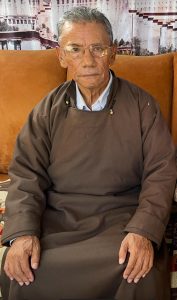 Mr. Sonam Morup, a Civil Engineer by profession, served in the Government of Jammu and Kashmir, India, in various capacities before retiring as a Superintending Engineer. He earned his B.E. degree in Civil Engineering from the Regional Engineering College, Sri Nagar (Kashmir) in 1973. Alongside his professional career, he has been actively associated with several social organisations. A keen student of religion and Buddhist philosophy, he is an avid reader and writer. He has authored several books and regularly contributes articles to various journals. Mr. Morup is married and resides in Leh, Ladakh, India.
Postal Address: Er. Sonam Morup (Retd. SE)
R/o Tashisthongsmon Colony / Village Sec – 1, Choglamsar – 194104 Leh Ladakh INDIA Email: sonamorupleh@gmail.com
Phone: +91 70514 45173